

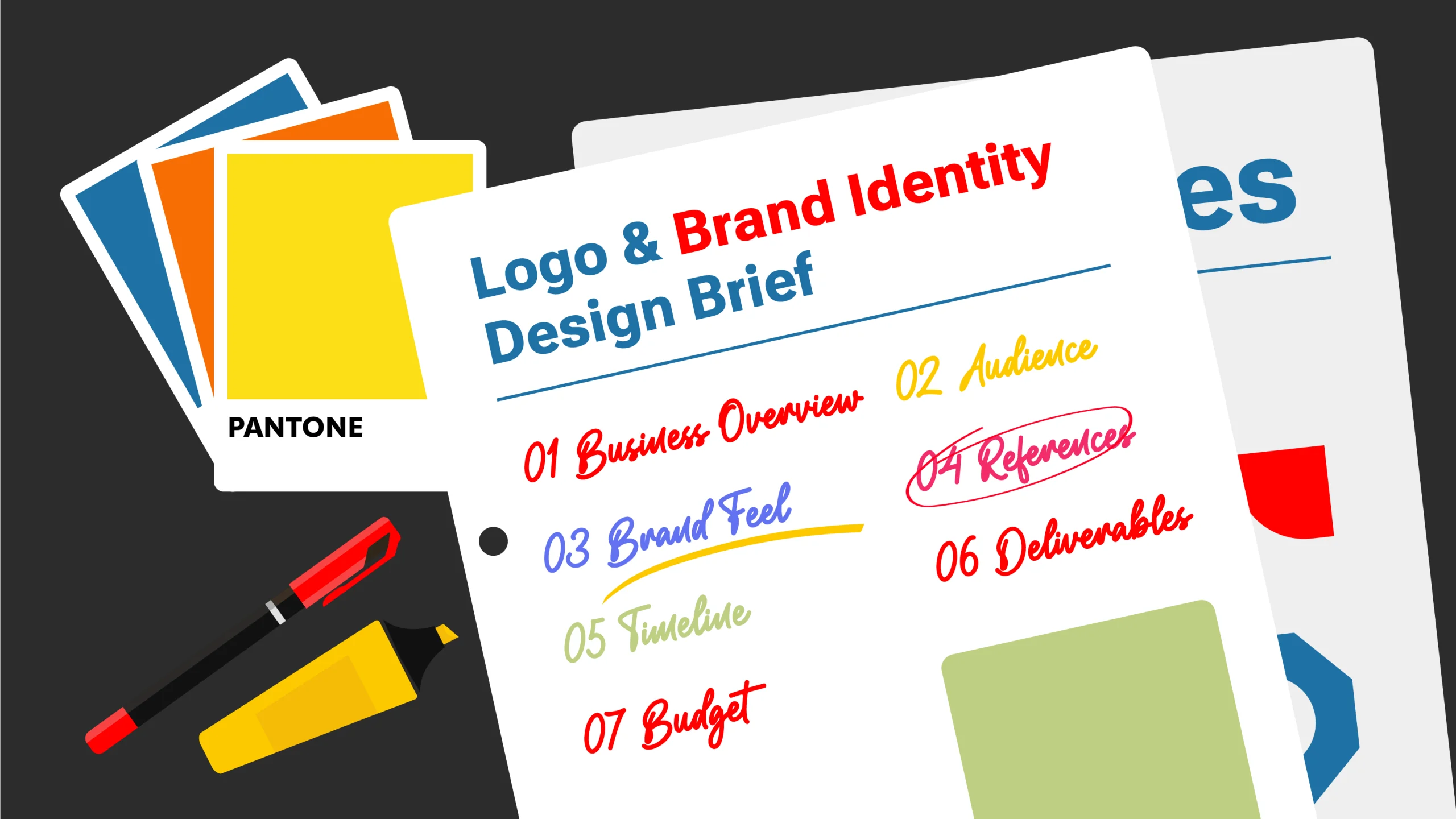
If you’ve ever hired a designer and felt like the first concepts missed the mark completely, the problem usually isn’t the designer’s skill. It’s the brief. After years of working with clients across 130+ countries, the projects that go smoothly almost always start with a client who took 20 minutes to think through what they actually needed, not just
“make me a nice logo.”
This applies whether you’re commissioning a standalone logo or a full brand identity color system, typography, mockups, guidelines, and all. The bigger the scope, the more a clear brief pays off.
Here’s how to write a brief that saves you time, money, and revision rounds. It saves you time, money, and revision rounds.
1. Start With Why, Not What
Don’t open with
“I need a minimalist logo with blue colors.”
Open with what your business does and who it’s for. A designer who understands that you’re a family-run spice brand trying to look premium enough for export markets will make very different choices than one who’s just told: “make it look premium.”
Include:
- What your business does, in one sentence
- Who your ideal customer is (Target audience)
- What makes you different from competitors
2. Show, Don’t Just Describe
“Modern but not too modern” means something different to every person who reads it. Instead, gather 3-5 reference logos or brands you admire, not because you want to copy them, but because they give your designer a visual anchor. Alongside those, share 1-2 examples you don’t want to look like. Contrast is often more useful than praise.
3. Give Real Constraints
Vague briefs produce vague logos. Useful constraints include:
- Where the logo will be used most (app icon, storefront sign, packaging, embroidery on uniforms)
- Whether it needs to work in a single color
- Any colors or symbols with cultural or personal meaning you want kept or avoided
- Budget and timeline: this shapes how many concepts and revisions are realistic
4. Name the Feeling, Not Just the Style
Instead of “I want a professional logo,” try describing the feeling: trustworthy but approachable, bold but not aggressive, playful but still credible for enterprise clients. Feelings translate into design decisions: typography weight, color temperature, and how sharp or rounded the shapes are far better than style labels do.
5. Include Your Non-Negotiables Upfront
If your business name must stay exactly as is, if you already own a domain that dictates spelling, or if a certain color is tied to your industry (green for organic, for example), say so before the first concept is made. Nothing wastes more time than a designer building three strong directions around a name or color that turns out to be off-limits.
6. If You Need More Than a Logo, Say So Early
A logo mark and a full brand identity are different projects, and your brief should make clear which one you’re asking for. If you need a complete identity system, spell out what that includes so scope and pricing are set correctly from the start:
- Color palette and how it should feel (warm and earthy, bold and saturated, muted and premium)
- Typography — do you need a full type system for headlines, body copy, and packaging, or just a wordmark?
- Real-world applications you’ll need mockups for: packaging, business cards, signage, social media, uniforms
- Whether you need a brand style guide document your team or future vendors can follow
- Any existing brand assets (old logo, tagline, brand colors) that need to carry over or be retired
Being specific here prevents a common mismatch: clients who expect a full identity system but are only briefed (and budgeted) for a logo mark.
7. Decide How You’ll Give Feedback
Vague feedback like “I don’t love it” is hard to act on. Instead, try structuring your reaction around three questions:
- What’s working here?
- What’s missing?
- What feels wrong, and why?
This turns feedback into direction instead of just rejection, and it usually gets you to the right logo in far fewer rounds.
8. A Simple Brief Template
If you want a starting point, here’s a short version you can fill in and send to any designer:
Business name: What we do: Who we serve: 3 words that describe the brand: Scope needed (logo only / full brand identity): Logos/brands we like (and why): Logos/brands we don’t want to resemble: Must-haves or non-negotiables: Primary use cases (app, signage, packaging, etc.): Existing brand assets to carry over or retire: Timeline:
Fill that in before your next design project, and you’ll notice the difference immediately: fewer rounds, less back-and-forth, and a final logo and brand identity that actually reflects the brand you were trying to build in the first place.
Need help turning your brief into a brand?
See our work→ or get in touch→ to start your logo design or brand identity project.